
The Locked-Room Illusion
The Murder of Roger AckroydThis flow follows the apparent impossibility of the locked study and shows how staged evidence creates the illusion of an outside intruder.
increasing Bearing strength in each event
 decreasing
Bearing strength in each eventdecreasingA Room Sealed
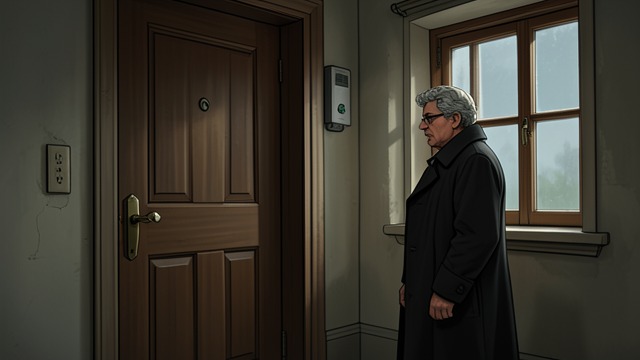
A Room Sealed
The order against disturbance
Ackroyd tells Sheppard to close and bolt the study window and says he does not want to be disturbed. The doctor claims to secure the room.
A condition of later mystery
The locked door and apparently secured window establish the problem investigators will face. The story depends on the reader accepting Sheppard’s account of the window.
Body Behind the Door
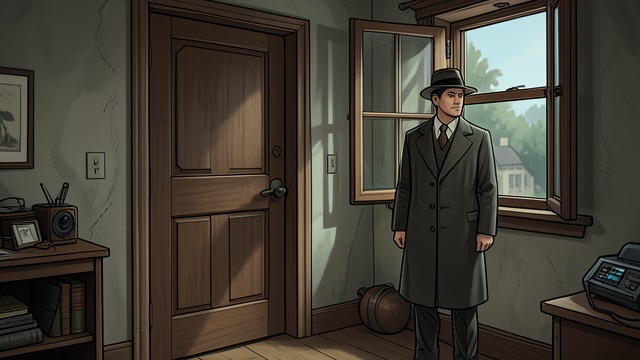
Body Behind the Door
Forced entry
Sheppard returns, finds the study locked, and joins Parker in breaking down the door. Ackroyd sits dead with a dagger in his neck.
A sealed-room puzzle
The key remains inside, while the window is open. These facts appear contradictory and encourage the assumption that a killer escaped by the window.
The Window’s Footprints
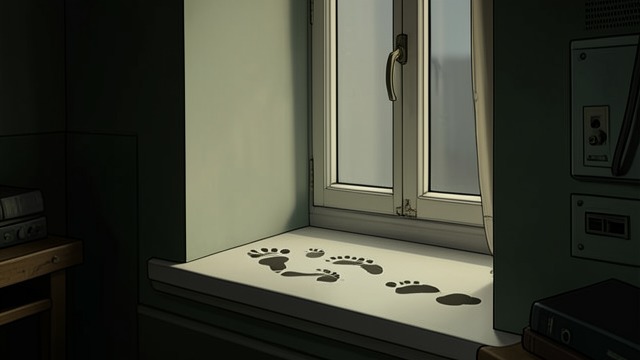
The Window’s Footprints
A visible route
Inspector Davis finds studded marks at the window sill. The impressions point inward and outward, offering a physical path in and out of the locked room.
A suspect supplied
The prints are matched to Ralph’s style of footwear. The apparently objective trace makes the impossible room seem solved before its maker is questioned.
The Staged Escape
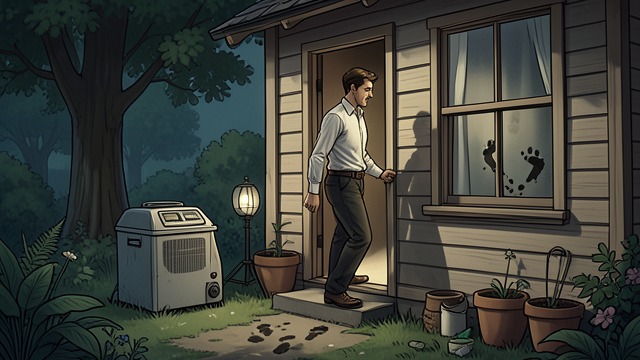
The Staged Escape
The killer’s route
Sheppard leaves by the front door, changes into Ralph’s shoes near the summerhouse, and creates prints at the study window. He re-enters, locks the room, and leaves by the window.
Time as a mechanism
The route takes about ten minutes, exactly matching the unexplained delay in his account. The sealed-room puzzle is an alibi constructed from deliberate movements.
The Illusion Explained
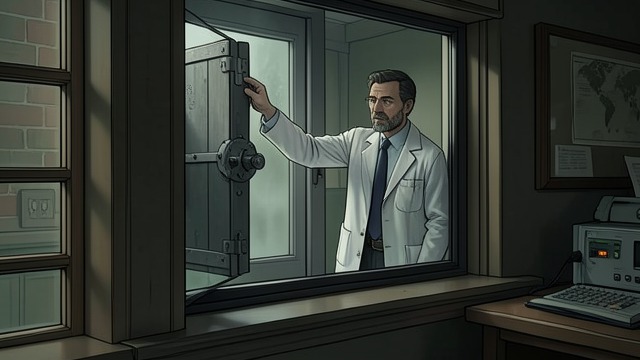
The Illusion Explained
Inside knowledge exposed
Poirot demonstrates that the room’s apparent closure depended on the doctor’s unverified claim that he bolted the window. Sheppard controlled both the crime scene and its account.
The impossible becomes ordinary
The locked room was never proof of a supernatural or brilliant escape. It was a practical deception made persuasive by the narrator’s authority and planted footprints.
Friday night, before Sheppard leaves
Friday night, after the false call
During the police inspection that night
Friday night, before Sheppard reaches the lodge gates
Near the ending, during Poirot’s private accusation
